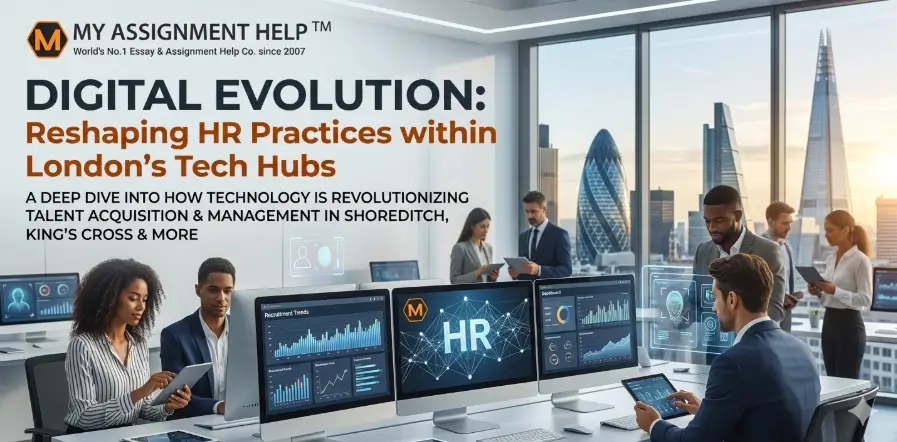
The skyline of London is no longer just a silhouette of historical architecture; it is the physical manifestation of a digital revolution. In tech clusters stretching from Shoreditch to King’s Cross, the traditional pillars of Human Resources are being dismantled and rebuilt using artificial intelligence, big data, and cloud-native architectures. This transformation isn’t just about efficiency; it’s about the $\Delta$ (change) in how organizations perceive human capital in a hyper-competitive global market.
As startups and scale-ups in the “Silicon Roundabout” compete for the world’s most elite software engineers and data scientists, HR departments have pivoted toward high-velocity digital strategies. This shift has significant implications for students and professionals entering the field. Navigating these complex shifts in labor dynamics requires deep academic rigor. Many students currently analyzing these trends find that myassignmenthelp provides the necessary human resource assignment help to bridge the gap between classroom theory and London’s fast-paced corporate reality. This support is crucial for mastering the E-E-A-T (Experience, Expertise, Authoritativeness, and Trustworthiness) standards expected in the 2026 academic landscape.
The academic pressure of documenting these rapid technological changes can be overwhelming for those balancing internships and studies. It is common for students to seek professional guidance and ask experts to do my assignment for me. By delegating the administrative burden of research, future HR leaders can focus on the strategic application of People Analytics and AI-driven retention models—the very tools currently defining London’s tech success.
Data Spotlight: Recent 2025-2026 surveys indicate that 82% of London-based tech firms have integrated AI into their initial candidate screening processes. Furthermore, organizations utilizing “Predictive People Analytics” have seen a 30% increase in employee retention rates compared to those using traditional management methods.
1. The Rise of Predictive People Analytics
The core of digital transformation in HR is the move from reactive to proactive management. In London’s tech hubs, “People Analytics” is used to forecast everything from future skills gaps to the probability of an employee leaving the company within the next six months. By applying statistical modeling to historical performance data, HR managers can now identify high-potential individuals before they even reach their peak performance.
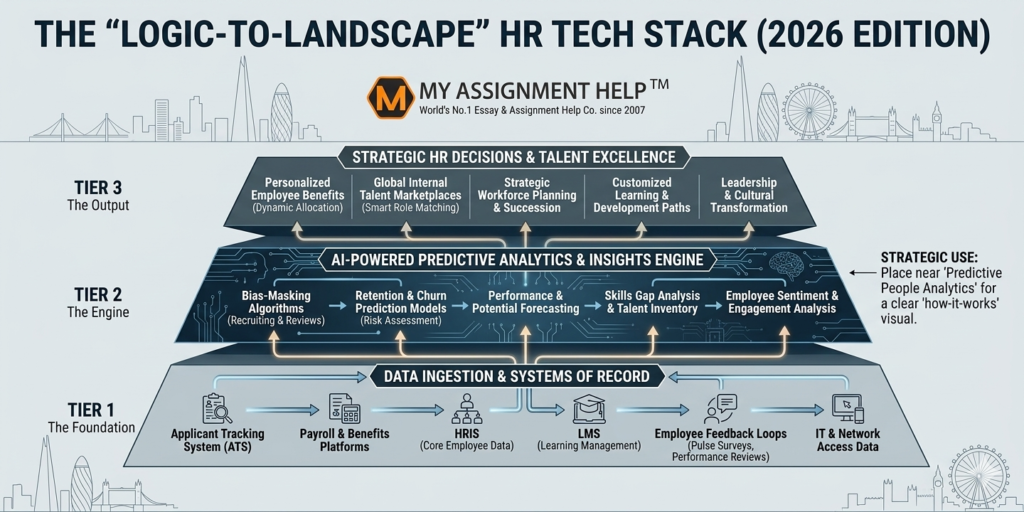
The Logic-to-Landscape HR Infrastructure
- Data Input: ERP, ATS, and Employee Surveys.
- AI Core: Machine learning models for bias detection.
- Strategic Output: Predictive retention and talent mapping.
2. Ethical AI in Recruitment and Bias Mitigation
With London being one of the most diverse cities on earth, the tech sector faces intense scrutiny regarding hiring bias. Digital transformation has introduced “blind” recruitment platforms that strip away demographic data, focusing purely on skill-based assessments. This ensures that the $P(hiring)$ (probability of hiring) is strictly a function of competence rather than unconscious bias.
3. The Hybrid Experience: Beyond Zoom and Slack
The London tech scene has moved past simple remote work. We are now in the era of the “Digital Employee Experience” (DEX). HR practices now utilize VR for onboarding and gamified platforms for continuous professional development (CPD). This maintains a high level of engagement even when teams are distributed across the UK and the US.
Key Takeaways for HR Professionals
- Data Literacy is Mandatory: Modern HR roles require a comfort level with data visualization and interpretation.
- AI as a Partner, Not a Replacement: Automation handles the “volume,” while humans handle the “nuance”.
- Hyper-Personalization: Benefit packages and career paths are now being personalized using AI to fit individual employee needs.
- UK Compliance: Digital tools must align with the latest UK GDPR and “Right to Disconnect” frameworks.
4. Reskilling for the Age of Automation
The lifespan of a technical skill in London is shrinking. HR departments in the tech sector are no longer just hiring for current roles; they are building internal “talent marketplaces”. These platforms use AI to suggest internal moves and reskilling pathways, ensuring the workforce evolves at the same speed as the company’s codebase.
See also: The Role of Technology in Disaster Management
Frequently Asked Questions
How does digital HR help with UK employment law?
Automated systems now track real-time changes in UK labor regulations, ensuring that contracts, holiday pay, and pension contributions remain 100% compliant without manual oversight.
Are these practices applicable only to large tech giants?
No. Scale-ups in the Shoreditch and Camden hubs are increasingly using “HR-as-a-Service” (HRaaS) cloud platforms to implement high-level digital practices on a startup budget.
What is the role of E-E-A-T in HR content?
For HR professionals sharing insights online, E-E-A-T ensures that the data provided is authoritative and trustworthy, which is vital for maintaining brand reputation in the London tech ecosystem.
Author Bio
James Montgomery | Lead Academic Strategist at MyAssignmentHelp James Montgomery is a senior content strategist with over 12 years of experience in the UK business and technology sectors. He specializes in workforce transformation and has published extensively on the impact of AI on regional labor markets. Currently, he works with the research team at MyAssignmentHelp to provide data-driven insights for students pursuing advanced degrees in Human Resource Management.
References & Sources:
- Chartered Institute of Personnel and Development (CIPD) – “Digital Work Trends 2026”.
- London Tech Week Executive Summary – “Talent and the Digital Divide”.
- UK Department for Science, Innovation and Technology – “AI and Employment Report 2025”.