3D printing has changed the way people design and create physical objects. Today, individuals, designers, and makers can transform digital concepts into real products faster than ever before. However, creating a successful 3D print is not only about having a model. The complete process involves idea creation, model generation, surface design, print preparation, and final production.
As AI becomes more connected with 3D printing, the focus is shifting from simply generating models to creating a complete workflow that helps users successfully bring ideas into the physical world.
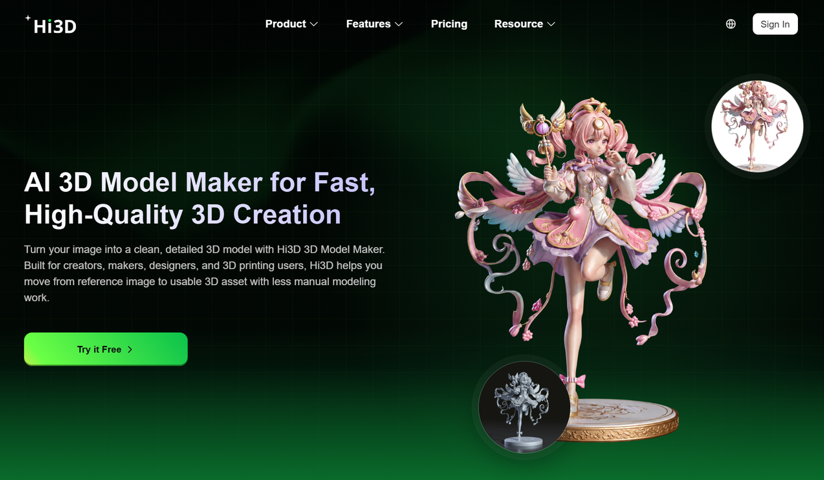
Hi3D is designed for this purpose. Instead of only providing AI-generated models, Hi3D combines AI creation tools with practical printing preparation features. From turning images and concepts into 3D models to improving textures, splitting complex designs, optimizing layouts, and preparing multi-color printing workflows, Hi3D helps creators move from the first idea to the final printed object more efficiently.
1. The Real Challenges Behind AI 3D Printing Today
AI has made 3D creation faster, but many users still face difficulties after generating a model. A model that looks impressive on screen does not always mean it is ready for printing.Different groups of users experience different problems during the process. Beginners may struggle with professional modeling software, designers may spend too much time preparing files, and experienced makers may still need to complete complicated manual adjustments before printing.
1.1 Moving Beyond Simple AI Model Generation
Many AI 3D tools focus mainly on helping users create a model. While this is an important first step, printing requires additional preparation.
Hi3D focuses on these practical problems by providing tools that support the entire journey from digital creation to physical production.
1.1.1 Why generating a model is only the beginning
A generated model may need improvements in structure, texture, color, size, or assembly before it can become a successful physical object. Without these additional steps, users often need to switch between multiple software programs to complete the workflow.A complete 3D model maker should not only help users create digital assets but also consider how those models will be used in real production.
Hi3D focuses on connecting creation and printing. By combining AI generation with printing-oriented features, it helps reduce the gap between a digital model and a physical product.
1.1.2 Helping creators focus on ideas instead of technical barriers
For many people interested in 3D printing, the biggest limitation is not creativity but technical complexity.Learning advanced modeling software, repairing meshes, preparing printable structures, and adjusting files for different printers can require significant time and experience.
Hi3D provides a more accessible approach through AI-assisted creation. Users can begin with images, ideas, or generated concepts and continue through a workflow designed around practical printing needs.This makes AI-powered AI 3D model maker workflows more useful for everyday creators, not only professional 3D artists.
2. Transform Images and Concepts into 3D Models with Hi3D
One of the most important changes brought by AI is the ability to transform existing ideas into three-dimensional objects more easily.Many creators already have visual references, including photos, illustrations, and digital designs. However, converting these references into printable 3D models traditionally requires manual modeling skills.
2.1 Creating 3D Models from Images
Hi3D helps simplify this process by allowing users to start from visual concepts and move toward 3D creation more naturally.A picture can contain a complete creative idea, but turning that idea into a printable object requires understanding depth, structure, and geometry.
2.1.1 Reducing the distance between 2D inspiration and 3D objects
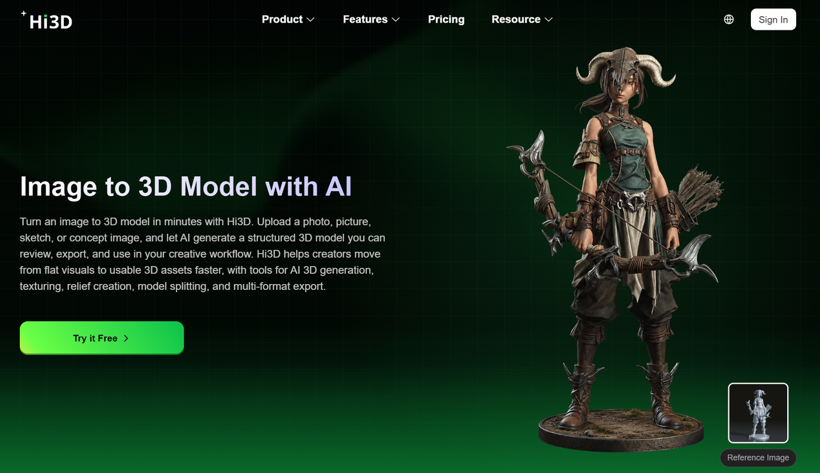
With photo to 3D model technology, Hi3D helps users transform visual references into three-dimensional models and continue developing them within an AI-powered workflow.This approach allows creators to explore more possibilities without spending excessive time rebuilding designs manually.
For example, a user can start with an image-based concept, generate a 3D model, improve its appearance, and prepare it for printing without switching between multiple complicated tools.
2.1.2 Making personalized creation faster and easier
Image-based 3D creation is especially valuable for users who want to create unique objects based on existing visual materials.Instead of starting from an empty modeling workspace, creators can use their own references as a foundation and focus on refining the final result.This workflow is useful for hobbyists, designers, and small creative teams that need faster ways to transform ideas into physical products.
3. Improving Visual Quality with AI-Generated Textures
A 3D model’s appearance is determined not only by its shape but also by its surface details. Texture plays an important role in making digital creations more realistic, expressive, and visually complete.However, manually creating textures can be a complicated process, especially for users who do not have experience with professional 3D design tools.
Hi3D provides AI-assisted texture creation features to help users improve the visual quality of their models.
3.1 Creating More Detailed and Attractive Models
Traditional texturing often requires additional software and manual adjustments. For creators who mainly want to design and print objects, this process can become a major obstacle.
3.1.1 Adding creative surfaces without complicated workflows
Through AI 3D model texturing capabilities, Hi3D helps users generate richer surface details and explore different visual styles more efficiently.AI-assisted texturing allows creators to spend more time developing ideas instead of focusing only on technical editing.
3.1.2 Preparing visually improved models for printing
In 3D printing, digital appearance and physical results are closely connected. A model with better textures and details can create a more impressive final object.
Hi3D focuses on connecting AI-generated visual improvements with practical printing workflows. After improving a model’s appearance, users can continue preparing the design through additional tools that support real printing processes.
4. Making Complex Models Easier to Print with Hi3D Preparation Tools
Creating a model is only one stage of 3D printing. Many creators face difficulties when preparing models for actual production.Large models may not fit printer build areas. Complex structures may require separation into multiple parts. Assembly may require additional connector design.
Hi3D provides features that help solve these problems and make the transition from digital model to physical print smoother.
4.1 Split Models into Printable Components
Many detailed models cannot be printed as a single piece because of size limitations or structural complexity.
4.1.1 Turning large designs into manageable print parts
Hi3D’s Split-for-Printing feature helps users separate complete models into printable parts. For character-based designs, the system can divide models into sections such as the head, body, arms, legs, accessories, and base.
Instead of manually cutting models in professional software, users can use an automated workflow to prepare models for printing.
4.1.2 Creating easier assembly after printing
Splitting a model is only useful when the separated parts can be assembled properly.
Hi3D supports automatic connector generation, helping create structures that connect printed parts together. Users can adjust connector size, direction, and placement depending on their printing requirements. This is especially helpful for makers creating figures, toys, collectibles, or other multi-part objects.
The workflow becomes simpler:A complete model can be generated, separated into printable parts, prepared with connectors, printed individually, and assembled into a finished object.
5. Bringing More Creativity to Physical Objects with Multi-Color Printing
Color is one of the most important elements in making printed objects visually appealing. However, creating multi-color prints requires more than simply adding colors digitally.The challenge is converting digital textures into practical filament-based printing information.
5.1 Reducing manual color preparation
Hi3D’s Multi-Color Printing feature helps transform AI-generated textured models into printable multi-color objects.
The system can generate printable color regions, map colors to available filament options, reduce unnecessary color fragmentation, and export ready-to-print 3MF files. This helps creators achieve more consistent results while reducing manual color adjustments during preparation.
5.2 Creating more realistic printed results
For creators producing characters, decorative models, or product concepts, color can significantly influence the final appearance.By connecting texture information with printing requirements, Hi3D helps users move closer to creating physical objects that better represent their original designs.
See also: Digital Evolution: Reshaping HR Practices within London’s Tech Hubs
6. Faster Printing Preparation with Smart Arrangement and 3MF Workflow
After creating and preparing a model, users still need to arrange files before printing. This includes selecting suitable orientations, placing parts on the build plate, and adjusting settings.
Hi3D helps simplify these final preparation steps.
6.1 Reducing repetitive setup work
Hi3D’s Smart Arrangement feature helps users organize models on the build plate and suggest better printing orientations. It can also provide suggested slicer settings and export the workflow as a 3MF file.
This reduces the amount of manual setup required before moving into slicing software.
6.2 Supporting different printing goals
Different models require different preparation strategies. Some creators may prioritize appearance, while others may want to reduce support structures and printing costs.
Hi3D provides options that help users choose more suitable arrangements depending on their printing goals, creating a smoother path from AI model generation to final printing.
7. Why Hi3D Is Different from Other AI 3D Tools
AI 3D creation platforms such as Meshy and Tripo have helped introduce more people to AI-generated models. However, creating a model is only part of the complete 3D printing process.
Hi3D focuses more on the connection between AI creation and real-world manufacturing.
7.1 A Complete Workflow Instead of Only Model Generation
Many tools can help users generate 3D assets, but creators may still need separate software for splitting, optimization, color preparation, and printing arrangement.
Hi3D combines these steps into a more connected workflow.As a 3D model maker online platform, Hi3D helps users move from initial ideas to printable results through a combination of AI generation and practical printing features.
7.2 Designed Around Real Maker Needs
The difference between a digital model and a successful print is often found in the preparation process.By supporting image-based creation, AI-assisted texturing, printable part preparation, multi-color workflows, and smart arrangement, Hi3D focuses on solving the challenges creators face after model generation.
8. Hi3D First Anniversary Celebration: Create More with Limited-Time Savings
The future of 3D printing is not only about creating models faster. It is about making the entire journey from imagination to physical objects easier and more accessible.
Hi3D helps creators explore new possibilities by combining AI creativity with practical printing workflows.
To celebrate its first anniversary, Hi3D is launching a limited-time promotion with up to 70% off, giving more users the opportunity to experience AI-powered 3D creation and printing.Whether you are exploring 3D printing for the first time or looking for a more efficient creative workflow, Hi3D provides the tools needed to transform ideas into real objects.
Start creating with Hi3D today and discover a simpler way to bring digital imagination into the physical world.